Buy yourwebsite.eu ?
We are moving the project
yourwebsite.eu .
Are you interested in purchasing the domain
yourwebsite.eu ?
domain@kv-gmbh.de · 0541-91531010
Buy yourwebsite.eu ?
How do you solve compound quantifiers?
Compound quantifiers can be solved by breaking them down into simpler quantifiers and then applying the appropriate rules. For example, if the compound quantifier is "for every x, there exists a y such that...", you can first consider the "for every x" part and then the "there exists a y" part separately. This allows you to apply the rules for universal and existential quantifiers to solve the compound quantifier step by step. By breaking down the compound quantifier into simpler parts and applying the rules systematically, you can effectively solve compound quantifiers. **
How do universal and existential quantifiers describe and negate statements?
Universal quantifiers, denoted by the symbol ∀, are used to make a statement about all elements in a set. For example, the statement "∀x P(x)" means that the predicate P(x) is true for all elements x in the set. To negate a universally quantified statement, we use the symbol ¬ before the quantifier, so the negation of "∀x P(x)" would be "¬∀x P(x)", which is equivalent to "∃x ¬P(x)". On the other hand, existential quantifiers, denoted by the symbol ∃, are used to make a statement about at least one element in a set. For example, the statement "∃x P(x)" means that there exists at least one element x in the set for which the predicate P(x) is true. To negate an existentially quantified statement, we use the symbol ¬ before the quantifier, so the negation of "∃x **

Similar search terms for Quantifiers
Top-Angebote
Products related to Quantifiers:
-
"Space Solutions 18"" 2 Drawer Mobile Vertical File Cabinet, Pearl White"The Mobile 2-Drawer Metal File Cabinet is designed for small office or home office use. The cabinet features a smart, efficient design that works well in small spaces and fits under most work surfaces or desks.144,49 $*Shipping: 0,00 $Secure redirect to the provider
-
"Space Solutions 18"" Deep 3 Drawer Mobile Organizer Metal Cabinet, Navy"The 3-Drawer Organizer Metal File Cabinet is a multi-functional file cabinet perfect for storing files, supplies, and accessories for your small office or home office.152,99 $*Shipping: 0,00 $Secure redirect to the provider
-
"Space Solutions 18"" Deep 2 Drawer Mobile Letter Width Vertical File Cabinet"Files, supplies, project folders, the things that matter and the things you can't throw away — they accumulate. And when they do, a drawer that slides smoothly and moves wherever you need it changes everything.147,99 $*Shipping: 0,00 $Secure redirect to the provider


-
How do you describe and negate universal and existential quantifiers in statements?
Universal quantifiers, denoted by the symbol ∀, are used to make a statement about all elements in a set. For example, the statement "∀x, P(x)" means "For all x, P(x) is true." To negate a universal quantifier, we use the symbol ¬, so the negation of "∀x, P(x)" is "¬(∀x, P(x))," which can be rewritten as "∃x, ¬P(x)," meaning "There exists an x such that P(x) is false." Existential quantifiers, denoted by the symbol ∃, are used to make a statement about the existence of at least one element in a set. For example, the statement "∃x, P(x)" means "There exists an x such that P(x) is true." To negate an existential quantifier, we use the symbol ¬, so the negation of "∃x, P(x)" is **
-
How can I express the following statement using quantifiers or mathematical symbols?
The statement "All cats are mammals" can be expressed using quantifiers and mathematical symbols as ∀x (Cat(x) → Mammal(x)), where ∀x denotes "for all x", Cat(x) represents "x is a cat", Mammal(x) represents "x is a mammal", and the arrow → denotes "implies". This statement asserts that for every x, if x is a cat, then x is a mammal. **
-
What are the rules for negating mathematical statements using quantifiers and sets?
When negating a mathematical statement with quantifiers and sets, the following rules apply: 1. To negate a statement with a universal quantifier (∀), change it to an existential quantifier (∃) and vice versa. 2. When negating a statement involving sets, use the complement of the set to negate the original statement. 3. When negating a statement involving a logical connective (such as AND, OR), apply De Morgan's laws to distribute the negation over the connectives. **
-
What is the difference between the E-Commerce Manager, the Merchant in E-Commerce, and the Specialist in E-Commerce?
The E-Commerce Manager is responsible for overseeing the overall e-commerce strategy, including managing the website, online marketing, and sales. They are often in charge of a team and are focused on driving the overall success of the e-commerce business. The Merchant in E-Commerce is responsible for selecting and sourcing products to sell online, negotiating with suppliers, and managing inventory. They are focused on the product side of e-commerce and ensuring that the right products are available to meet customer demand. The Specialist in E-Commerce is an expert in a specific area of e-commerce, such as digital marketing, website optimization, or customer experience. They provide specialized knowledge and skills to support the overall e-commerce strategy and may work closely with the E-Commerce Manager and Merchant to achieve specific goals. **


How does E-Commerce work?
E-commerce works by allowing businesses to sell products or services online through a website or online marketplace. Customers can browse through the products, add items to their cart, and proceed to checkout by entering their payment and shipping information. Once the order is placed, the business processes the payment, fulfills the order, and ships the products to the customer. E-commerce platforms also handle tasks such as inventory management, order tracking, and customer support to ensure a smooth shopping experience. **
Will e-commerce always work?
E-commerce has been successful and continues to grow, but it may not always work for every business. Factors such as changing consumer preferences, technological advancements, and market competition can impact the success of e-commerce. Additionally, some products and services may be better suited for traditional retail channels. However, with the right strategies and adaptation to market trends, e-commerce can remain a viable and profitable business model for many companies. **
Top-Angebote
Products related to Quantifiers:
-
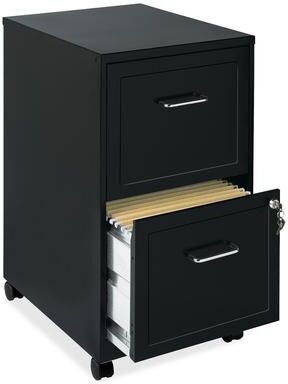
"Space Solutions 18"" Deep 2-drawer Mobile File Cabinet, Black"Keep your files organized and secure with the two lockable drawers of this mobile file cabinet. The drawers are deep enough to store letter-size files, and the smooth glide suspensions ease their operation.101,67 $*Shipping: 0,00 $Secure redirect to the provider
-
"Space Solutions 18"" 2 Drawer Mobile Vertical File Cabinet, Pearl White"The Mobile 2-Drawer Metal File Cabinet is designed for small office or home office use. The cabinet features a smart, efficient design that works well in small spaces and fits under most work surfaces or desks.144,49 $*Shipping: 0,00 $Secure redirect to the provider
-
How do you solve compound quantifiers?
Compound quantifiers can be solved by breaking them down into simpler quantifiers and then applying the appropriate rules. For example, if the compound quantifier is "for every x, there exists a y such that...", you can first consider the "for every x" part and then the "there exists a y" part separately. This allows you to apply the rules for universal and existential quantifiers to solve the compound quantifier step by step. By breaking down the compound quantifier into simpler parts and applying the rules systematically, you can effectively solve compound quantifiers. **
-
How do universal and existential quantifiers describe and negate statements?
Universal quantifiers, denoted by the symbol ∀, are used to make a statement about all elements in a set. For example, the statement "∀x P(x)" means that the predicate P(x) is true for all elements x in the set. To negate a universally quantified statement, we use the symbol ¬ before the quantifier, so the negation of "∀x P(x)" would be "¬∀x P(x)", which is equivalent to "∃x ¬P(x)". On the other hand, existential quantifiers, denoted by the symbol ∃, are used to make a statement about at least one element in a set. For example, the statement "∃x P(x)" means that there exists at least one element x in the set for which the predicate P(x) is true. To negate an existentially quantified statement, we use the symbol ¬ before the quantifier, so the negation of "∃x **
-
How do you describe and negate universal and existential quantifiers in statements?
Universal quantifiers, denoted by the symbol ∀, are used to make a statement about all elements in a set. For example, the statement "∀x, P(x)" means "For all x, P(x) is true." To negate a universal quantifier, we use the symbol ¬, so the negation of "∀x, P(x)" is "¬(∀x, P(x))," which can be rewritten as "∃x, ¬P(x)," meaning "There exists an x such that P(x) is false." Existential quantifiers, denoted by the symbol ∃, are used to make a statement about the existence of at least one element in a set. For example, the statement "∃x, P(x)" means "There exists an x such that P(x) is true." To negate an existential quantifier, we use the symbol ¬, so the negation of "∃x, P(x)" is **
-
How can I express the following statement using quantifiers or mathematical symbols?
The statement "All cats are mammals" can be expressed using quantifiers and mathematical symbols as ∀x (Cat(x) → Mammal(x)), where ∀x denotes "for all x", Cat(x) represents "x is a cat", Mammal(x) represents "x is a mammal", and the arrow → denotes "implies". This statement asserts that for every x, if x is a cat, then x is a mammal. **
Similar search terms for Quantifiers
-
"Space Solutions 18"" Deep 3 Drawer Mobile Organizer Metal Cabinet, Navy"The 3-Drawer Organizer Metal File Cabinet is a multi-functional file cabinet perfect for storing files, supplies, and accessories for your small office or home office.152,99 $*Shipping: 0,00 $Secure redirect to the provider
-
"Space Solutions 18"" Deep 2 Drawer Mobile Letter Width Vertical File Cabinet"Files, supplies, project folders, the things that matter and the things you can't throw away — they accumulate. And when they do, a drawer that slides smoothly and moves wherever you need it changes everything.147,99 $*Shipping: 0,00 $Secure redirect to the provider
-
"Space Solutions 18"" 2 Drawer Mobile Smart Vertical File Cabinet, Navy"The Mobile 2-Drawer Metal File Cabinet is designed for small office or home office use. The cabinet features a smart, efficient design that works well in small spaces and fits under most work surfaces or desks.101,62 $*Shipping: 0,00 $Secure redirect to the provider
-
What are the rules for negating mathematical statements using quantifiers and sets?
When negating a mathematical statement with quantifiers and sets, the following rules apply: 1. To negate a statement with a universal quantifier (∀), change it to an existential quantifier (∃) and vice versa. 2. When negating a statement involving sets, use the complement of the set to negate the original statement. 3. When negating a statement involving a logical connective (such as AND, OR), apply De Morgan's laws to distribute the negation over the connectives. **
-
What is the difference between the E-Commerce Manager, the Merchant in E-Commerce, and the Specialist in E-Commerce?
The E-Commerce Manager is responsible for overseeing the overall e-commerce strategy, including managing the website, online marketing, and sales. They are often in charge of a team and are focused on driving the overall success of the e-commerce business. The Merchant in E-Commerce is responsible for selecting and sourcing products to sell online, negotiating with suppliers, and managing inventory. They are focused on the product side of e-commerce and ensuring that the right products are available to meet customer demand. The Specialist in E-Commerce is an expert in a specific area of e-commerce, such as digital marketing, website optimization, or customer experience. They provide specialized knowledge and skills to support the overall e-commerce strategy and may work closely with the E-Commerce Manager and Merchant to achieve specific goals. **
-
How does E-Commerce work?
E-commerce works by allowing businesses to sell products or services online through a website or online marketplace. Customers can browse through the products, add items to their cart, and proceed to checkout by entering their payment and shipping information. Once the order is placed, the business processes the payment, fulfills the order, and ships the products to the customer. E-commerce platforms also handle tasks such as inventory management, order tracking, and customer support to ensure a smooth shopping experience. **
-
Will e-commerce always work?
E-commerce has been successful and continues to grow, but it may not always work for every business. Factors such as changing consumer preferences, technological advancements, and market competition can impact the success of e-commerce. Additionally, some products and services may be better suited for traditional retail channels. However, with the right strategies and adaptation to market trends, e-commerce can remain a viable and profitable business model for many companies. **
* All prices are inclusive of VAT and, if applicable, plus shipping costs. The offer information is based on the details provided by the respective shop and is updated through automated processes. Real-time updates do not occur, so deviations can occur in individual cases. ** Note: Parts of this content were created by AI.