Buy yourwebsite.eu ?
We are moving the project
yourwebsite.eu .
Are you interested in purchasing the domain
yourwebsite.eu ?
domain@kv-gmbh.de · 0541-91531010
Buy yourwebsite.eu ?
What are quantities?
Quantities are numerical values that represent the amount or measurement of something. They can be expressed in different units of measurement, such as weight, length, time, or volume. Quantities are used in various fields such as science, mathematics, and economics to describe and compare different aspects of the physical world. Understanding quantities is essential for making accurate calculations, predictions, and decisions in many areas of study and everyday life. **
What is the difference between fundamental quantities and derived quantities?
Fundamental quantities are the basic physical quantities that cannot be defined in terms of other physical quantities, such as length, mass, time, electric current, temperature, amount of substance, and luminous intensity. Derived quantities, on the other hand, are physical quantities that are derived from fundamental quantities through mathematical operations or combinations, such as velocity (which is derived from length and time) or density (which is derived from mass and volume). In summary, fundamental quantities are the building blocks of the measurement system, while derived quantities are derived from these fundamental quantities. **


Similar search terms for Quantities
Top-Angebote
Products related to Quantities:
-
"Space Solutions 18"" 2 Drawer Mobile Vertical File Cabinet, Pearl White"The Mobile 2-Drawer Metal File Cabinet is designed for small office or home office use. The cabinet features a smart, efficient design that works well in small spaces and fits under most work surfaces or desks.144,49 $*Shipping: 0,00 $Secure redirect to the provider
-
"Space Solutions 18"" Deep 3 Drawer Mobile Organizer Metal Cabinet, Navy"The 3-Drawer Organizer Metal File Cabinet is a multi-functional file cabinet perfect for storing files, supplies, and accessories for your small office or home office.152,99 $*Shipping: 0,00 $Secure redirect to the provider
-
"Space Solutions 18"" Deep 2 Drawer Mobile Letter Width Vertical File Cabinet"Files, supplies, project folders, the things that matter and the things you can't throw away — they accumulate. And when they do, a drawer that slides smoothly and moves wherever you need it changes everything.147,99 $*Shipping: 0,00 $Secure redirect to the provider


-
What are geometric quantities?
Geometric quantities are measurements or properties of geometric figures or shapes. These quantities can include length, area, volume, angles, and curvature. They are used to describe and analyze the characteristics of geometric objects in mathematics and physics. Geometric quantities play a crucial role in various fields such as engineering, architecture, and computer graphics. **
-
What are physical quantities?
Physical quantities are measurable properties of objects or phenomena that can be quantified using standard units of measurement. These quantities can be classified as either scalar or vector quantities, depending on whether they have only magnitude or both magnitude and direction. Examples of physical quantities include length, mass, time, temperature, and velocity. Physical quantities play a crucial role in physics and other scientific disciplines as they help describe and analyze the behavior of the natural world. **
-
What physical quantities are there?
Physical quantities are properties that can be measured and described using numerical values. Some examples of physical quantities include length, mass, time, temperature, electric charge, and energy. These quantities can be classified as either scalar (magnitude only) or vector (magnitude and direction). Physical quantities are fundamental in physics and are used to describe the behavior of matter and energy in the universe. **
-
What are these physical quantities?
These physical quantities are measurements of fundamental properties of the natural world. They can include things like mass, length, time, temperature, and electric charge. These quantities are used to describe and quantify the behavior of objects and systems in the physical world. They are essential for making predictions, conducting experiments, and understanding the laws of physics. **


What are vector quantities in physics?
Vector quantities in physics are physical quantities that have both magnitude and direction. Examples of vector quantities include displacement, velocity, acceleration, force, and momentum. These quantities are represented by arrows in diagrams, with the length of the arrow representing the magnitude and the direction of the arrow indicating the direction of the quantity. Vector quantities follow the rules of vector addition and subtraction, making them distinct from scalar quantities, which only have magnitude. **
In what quantities are Ohropax available?
Ohropax earplugs are typically available in packs containing 6 pairs of earplugs. These packs are convenient for individuals who use earplugs frequently and need to have a steady supply on hand. Additionally, Ohropax also offers larger packs containing 12 pairs for those who may need a larger quantity for extended use or sharing with others. **
Top-Angebote
Products related to Quantities:
-
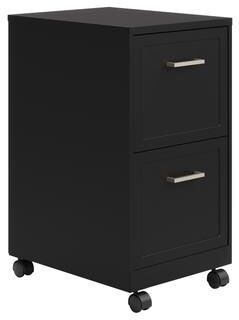
"Space Solutions 18"" Deep 2-drawer Mobile File Cabinet, Black"Keep your files organized and secure with the two lockable drawers of this mobile file cabinet. The drawers are deep enough to store letter-size files, and the smooth glide suspensions ease their operation.101,67 $*Shipping: 0,00 $Secure redirect to the provider
-
"Space Solutions 18"" 2 Drawer Mobile Vertical File Cabinet, Pearl White"The Mobile 2-Drawer Metal File Cabinet is designed for small office or home office use. The cabinet features a smart, efficient design that works well in small spaces and fits under most work surfaces or desks.144,49 $*Shipping: 0,00 $Secure redirect to the provider
-
What are quantities?
Quantities are numerical values that represent the amount or measurement of something. They can be expressed in different units of measurement, such as weight, length, time, or volume. Quantities are used in various fields such as science, mathematics, and economics to describe and compare different aspects of the physical world. Understanding quantities is essential for making accurate calculations, predictions, and decisions in many areas of study and everyday life. **
-
What is the difference between fundamental quantities and derived quantities?
Fundamental quantities are the basic physical quantities that cannot be defined in terms of other physical quantities, such as length, mass, time, electric current, temperature, amount of substance, and luminous intensity. Derived quantities, on the other hand, are physical quantities that are derived from fundamental quantities through mathematical operations or combinations, such as velocity (which is derived from length and time) or density (which is derived from mass and volume). In summary, fundamental quantities are the building blocks of the measurement system, while derived quantities are derived from these fundamental quantities. **
-
What are geometric quantities?
Geometric quantities are measurements or properties of geometric figures or shapes. These quantities can include length, area, volume, angles, and curvature. They are used to describe and analyze the characteristics of geometric objects in mathematics and physics. Geometric quantities play a crucial role in various fields such as engineering, architecture, and computer graphics. **
-
What are physical quantities?
Physical quantities are measurable properties of objects or phenomena that can be quantified using standard units of measurement. These quantities can be classified as either scalar or vector quantities, depending on whether they have only magnitude or both magnitude and direction. Examples of physical quantities include length, mass, time, temperature, and velocity. Physical quantities play a crucial role in physics and other scientific disciplines as they help describe and analyze the behavior of the natural world. **
Similar search terms for Quantities
-
"Space Solutions 18"" Deep 3 Drawer Mobile Organizer Metal Cabinet, Navy"The 3-Drawer Organizer Metal File Cabinet is a multi-functional file cabinet perfect for storing files, supplies, and accessories for your small office or home office.152,99 $*Shipping: 0,00 $Secure redirect to the provider
-
"Space Solutions 18"" Deep 2 Drawer Mobile Letter Width Vertical File Cabinet"Files, supplies, project folders, the things that matter and the things you can't throw away — they accumulate. And when they do, a drawer that slides smoothly and moves wherever you need it changes everything.147,99 $*Shipping: 0,00 $Secure redirect to the provider
-
"Space Solutions 18"" 2 Drawer Mobile Smart Vertical File Cabinet, Navy"The Mobile 2-Drawer Metal File Cabinet is designed for small office or home office use. The cabinet features a smart, efficient design that works well in small spaces and fits under most work surfaces or desks.101,62 $*Shipping: 0,00 $Secure redirect to the provider
-
What physical quantities are there?
Physical quantities are properties that can be measured and described using numerical values. Some examples of physical quantities include length, mass, time, temperature, electric charge, and energy. These quantities can be classified as either scalar (magnitude only) or vector (magnitude and direction). Physical quantities are fundamental in physics and are used to describe the behavior of matter and energy in the universe. **
-
What are these physical quantities?
These physical quantities are measurements of fundamental properties of the natural world. They can include things like mass, length, time, temperature, and electric charge. These quantities are used to describe and quantify the behavior of objects and systems in the physical world. They are essential for making predictions, conducting experiments, and understanding the laws of physics. **
-
What are vector quantities in physics?
Vector quantities in physics are physical quantities that have both magnitude and direction. Examples of vector quantities include displacement, velocity, acceleration, force, and momentum. These quantities are represented by arrows in diagrams, with the length of the arrow representing the magnitude and the direction of the arrow indicating the direction of the quantity. Vector quantities follow the rules of vector addition and subtraction, making them distinct from scalar quantities, which only have magnitude. **
-
In what quantities are Ohropax available?
Ohropax earplugs are typically available in packs containing 6 pairs of earplugs. These packs are convenient for individuals who use earplugs frequently and need to have a steady supply on hand. Additionally, Ohropax also offers larger packs containing 12 pairs for those who may need a larger quantity for extended use or sharing with others. **
* All prices are inclusive of VAT and, if applicable, plus shipping costs. The offer information is based on the details provided by the respective shop and is updated through automated processes. Real-time updates do not occur, so deviations can occur in individual cases. ** Note: Parts of this content were created by AI.